
The Organizational Rocket is a leadership model that explains how organizations move forward with clarity, force, and direction. It makes visible what many leaders sense intuitively: progress is not the result of isolated initiatives, but of alignment between direction, execution, and human energy.
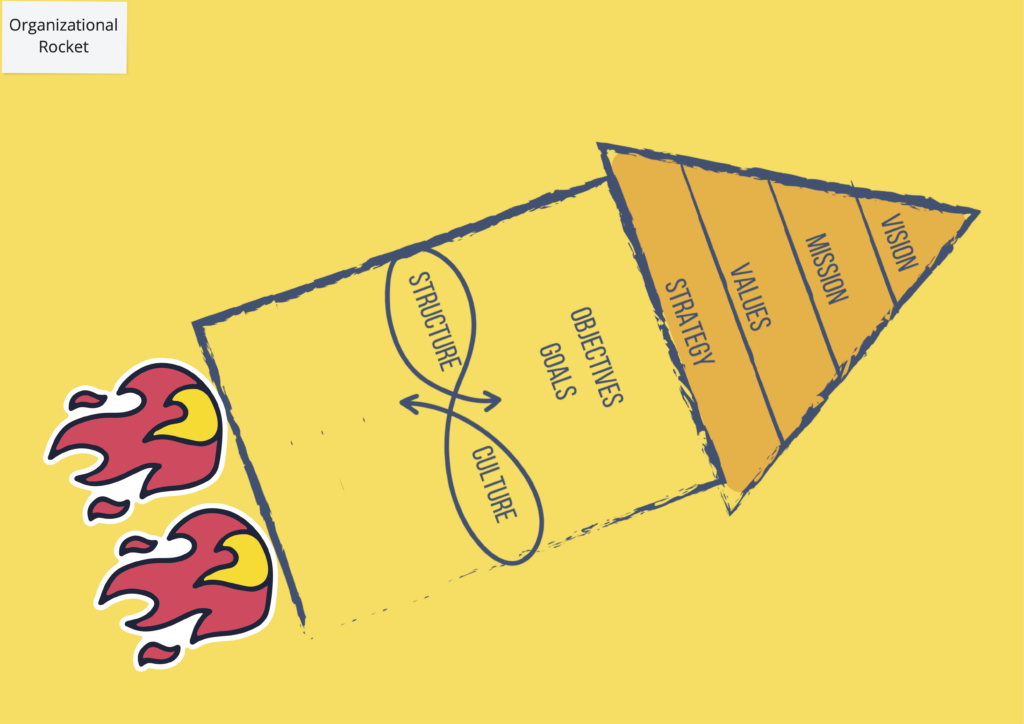
The Front: Direction and Guidance
At the front of the rocket are the guiding elements. They determine where the organization is heading and how it navigates complexity.
- Vision defines the future the organization is committed to creating. It is a longterm dream and gives orientation and direction.
- Mission clarifies the organization’s purpose—why it exists and what it contributes.
- Values set the non-negotiables for behavior and decision-making, especially when trade-offs are hard.
- Strategy turns intent into direction, making deliberate choices about focus, priorities, and what not to do.
If these elements are unclear or misaligned, the rocket may generate a lot of activity—without meaningful progress.
The Body: Turning Direction into Action
The body of the rocket contains the tactical and operational elements that translate direction into movement.
- Objectives and Goals create focus and measurability. They connect strategy to everyday decisions and work.
- Structure and Culture form the internal mechanics of the organization.
- Structure defines roles, responsibilities, decision paths, and coordination mechanisms.
- Culture shapes how people actually think, interact, and act—especially when no one is watching.
Structure and culture constantly influence each other. When they are aligned, they reduce friction and enable flow. When they are not, even the best strategy struggles to gain traction.
The Engines: People and Motivation
At the back of the rocket are the engines—the motivation of the people in the organization.
This is where real power comes from. Movement does not originate from frameworks, targets, or processes. It originates from people who are willing to invest energy, take responsibility, and contribute their best thinking.
Motivation fuels commitment, adaptability, and resilience. Without it, the rocket remains technically sound—and stationary.
What This Means for Leadership
The Organizational Rocket makes one thing unmistakably clear: leaders do not create movement by pushing harder. They create movement by aligning direction, enabling execution, and cultivating the conditions in which people choose to engage.
If the organization is not moving, the question is not “Why aren’t people performing?”
The better question is: “What in our direction, alignment, or leadership is draining their energy?”
Because rockets do not move on plans alone.
They move on fuel—and in organizations, that fuel is human motivation.